 Opinionated Code
Let me tell you about my friend, the brilliant software developer who spent an entire weekend building a custom blog engine. It had markdown support, dark mode, even a custom emoji parser. The blog? Still empty. Two years later.
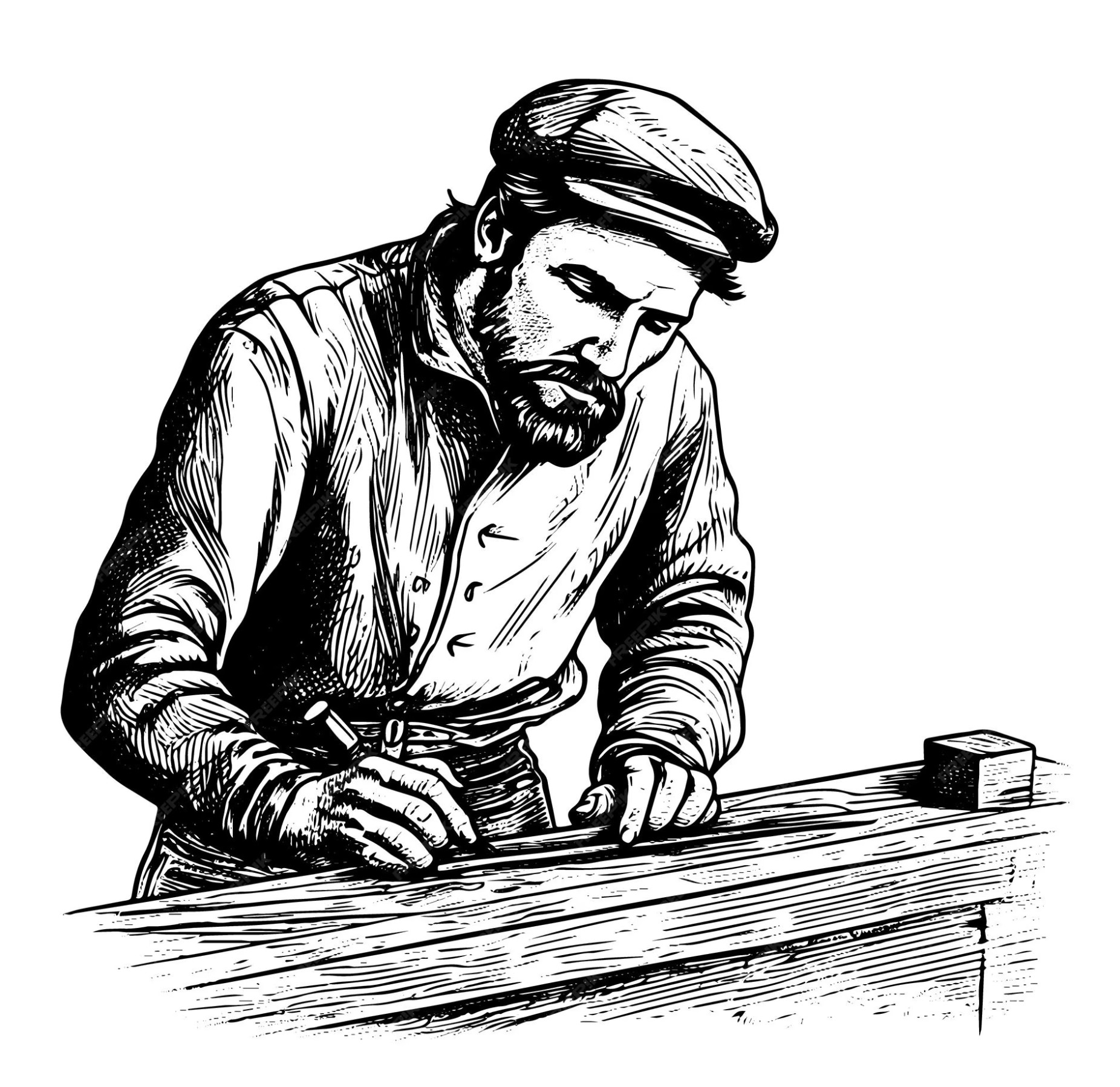
He’s what I call a "carpenter developer". You might be one too.
What’s a carpenter developer, you ask? It’s a special breed of engineer who insists on building everything from scratch. Not just the app, but the tools for the app, the deployment scripts, the CSS framework, the database abstraction layer, the authentication system, the admin dashboard, and of course, a bespoke comment engine. All handcrafted with artisanal code, no frameworks touched, and definitely no third-party dependencies unless it’s Vim.
In essence: the developer who, when needing a chair, decides to build it from a tree.
Sure, it’s impressive. But also: "my dude, IKEA exists for a reason".
The Allure of the Sawdust
There’s a romance to building things yourself. Developers are, by nature, builders. We love understanding how things work. We love optimizing, tweaking, and most importantly: we love saying “I made that.”
So when a side project idea pops up, we reach for our metaphorical toolbelt. Suddenly, your to-do list isn’t “launch MVP.” It’s “write custom ORM.”
And here’s the truth: yes, we can build it. But should we?
When Perfection is the Enemy of Progress
The carpenter complex doesn’t just burn time. It’s the reason so many brilliant side projects gather dust in GitHub graveyards. When you obsess over every joinery detail (read: obsessively perfect your config files), the actual project never sees daylight.
You don’t need a hand-carved table. You need somewhere to eat dinner.
In fact, some of the most successful developers I know barely write any code for their own products. They delegate, hire, automate, reuse. They’re not less skilled, they’re just better at picking their battles.
Delegation Isn’t Defeat—It’s Design
Let’s flip the narrative.
Imagine you’re a master carpenter walking into a furniture store. You don’t scoff at the tables. You inspect the grain. You flip it over and check the joints. You know what’s good and what’s garbage because you’ve made them yourself.
That’s the magic of experience. Once you’ve built a few tools, you get better at choosing them. You delegate not blindly, but with taste.
So, when it comes to side projects, hiring a freelancer to build your MVP, or using a no-code tool, or picking a SaaS to handle user auth, these aren’t shortcuts. These are smart design choices.
Because the real product isn’t the code. It’s the impact.
Passion, Time, and The Illusion of Infinite Energy
Let’s be real. Most developers don’t have time to be full-time artisans. You’ve got a job, maybe kids, or friends who suspiciously want to hang out away from a terminal.
Side projects often die not because they’re bad ideas, but because you’re tired. Or because you started three at once. Or because after a day of writing code for clients, writing more code just… isn’t the vibe.
In these cases, hiring help isn’t lazy, it’s the only way your idea will breathe.
You’re not outsourcing your vision. You’re protecting it from dying of neglect.
The Right Time to Drop the Hammer
Now, don’t get me wrong. Sometimes, building the table is the point. Maybe you want to learn a new framework. Maybe it’s a portfolio piece. Maybe you're just really into dovetail joints and wood glue.
That’s valid.
But if your goal is to launch, ship, or test an idea, you need to ask:
“Am I building because it’s necessary, or because it’s comfortable?”
Knowing the answer makes you a professional. Acting on it makes you wise.
In Conclusion: Be the Carpenter Who Knows the Market
The best carpenters don’t just build tables, they know how to pick great ones. They know when to sand, when to glue, and when to swipe a credit card and move on.
As a developer, your power isn’t just in your code, it’s in your judgment. Learn to delegate, to collaborate, to trust. That’s how you move from hacker to builder to visionary.
Because in the end, nobody will remember how elegant your recursive menu parser was. But they will remember the product you actually shipped.
Now go buy that damn chair.